
2014 Tesla Model S P85 Review: Is a 12-Year-Old Tesla Worth It in 2026?
Honest dealer review of a 2014 Tesla Model S P85 at 112k miles: battery degradation, Supercharging, MCU issues, and who should buy one.
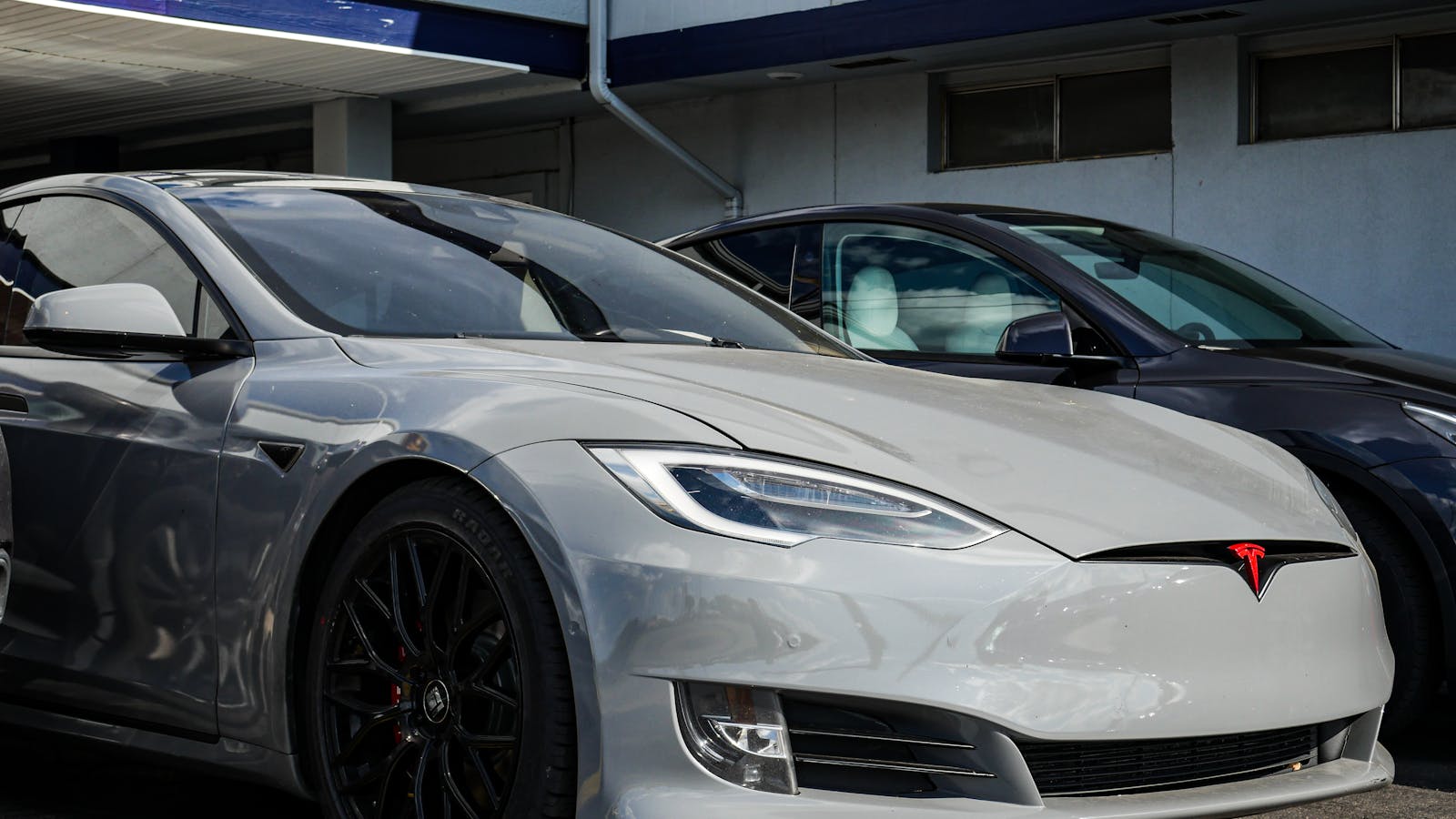
People see "$14,900 Tesla" and they stop thinking clearly.
I get it. A Model S P85 — the performance flagship of 2014, a car that did 0-60 in 4.2 seconds and had a 265-mile EPA range — for under fifteen grand. That's a head-turner.
But I've been in this business 10 years and I've watched enough used EVs cycle through the market to tell you: there's a version of this purchase that makes total sense, and a version that becomes a $6,000 problem 18 months later. The difference is knowing which one you're looking at before you sign.
We currently have a 2014 Tesla Model S P85 in our inventory at $14,900 — 112,591 miles, rear-wheel drive. Let me tell you exactly what I'd want to know if I were buying this car myself.
Quick Verdict
Buy it if: you want a long-range EV under $15k, can verify battery health before signing, and have access to home charging or local Superchargers.
Skip it if: you need warranty coverage, can't absorb a $5,000-$12,000 battery replacement risk down the road, or you're shopping purely on monthly payment without thinking about ownership cost.
What the P85 Was (and Why It Still Matters)
The 2014 Model S P85 was not the base Model S. The "P" stood for Performance. In 2014, this was a car that embarrassed $80,000 BMWs off the line. Dual-motor all-wheel drive came with the P85D, but the P85 (single rear motor) still made around 470 horsepower.
The interior was built to compete with the Mercedes S-Class. 17-inch touchscreen. Air suspension. Power-adjustable everything. This was Tesla trying to prove an EV could be a real luxury car, and by 2014 standards, it succeeded.
Twelve years later, the hardware still impresses. The software is the complicated part.
Battery Degradation: The Number That Actually Matters
At 112,591 miles over 12 years, what does the battery look like?
Here's what the data says about P85 packs at this age and mileage: the average Model S P85 at 100k-120k miles shows 15-25% degradation from its original 265-mile EPA range. Real-world expected range at this mileage is typically 200-225 miles on a warm day with moderate driving.
In Florida, cold weather isn't your problem. Heat is. And Florida summers do accelerate battery aging slightly faster than moderate climates, though this is a secondary factor compared to charge cycles and overall time.
Before you buy any used Tesla, run these checks:
1. Pull the battery report from the car's touchscreen. Go to Controls > Service > Battery Health. A healthy P85 at this age should show a rated range of at least 200 miles. If it shows less than 190, the degradation is accelerated — ask why.
2. Check for any history of "Reduced Power" warnings. These appear in the car's logs. A Tesla-savvy pre-purchase inspector can pull this. Repeated reduced-power events suggest the battery management system has been limiting the pack due to cell imbalance.
3. Supercharging frequency matters. A car that lived on DC fast charging exclusively degrades faster. Ask if you can see the Supercharger history (some owners can pull this from the Tesla app). Heavy Supercharger use isn't disqualifying, but it's a data point.
4. Charge to 100% and watch it sit. A healthy pack holds voltage. If the rated range drops noticeably within 12 hours of a 100% charge (without driving), that's a sign of cell degradation.
The Free Supercharging Question
2014 Model S vehicles were sold with unlimited free Supercharging for life — tied to the vehicle, transferable to new owners. If this car has that grandfathered perk, it's legitimately valuable.
In Florida, Supercharging at current Tesla rates runs roughly $0.31-$0.39 per kWh. Filling a degraded P85 from 20% to 90% is about 50-55 kWh. At $0.35/kWh, that's $17-19 per "fill." If you drive 15,000 miles per year and charge primarily via Supercharger, you're looking at $700-$1,000/year in fuel costs that free Supercharging eliminates.
Check the car's Supercharging status in the Tesla app before buying. Not all 2014 cars retained this benefit — some had it removed after ownership transfers where the perk wasn't disclosed properly.
MCU1: The Infotainment Problem Nobody Warns You About
Here's what dealers who don't specialize in EVs won't tell you: the 2014 Model S runs MCU1 — Media Control Unit version 1. It uses an NVIDIA Tegra 3 processor and an internal eMMC flash memory chip that has a documented failure point.
The eMMC chip stores logs. Over years of constant writes, it wears out. When it fails, the touchscreen goes dark. You lose navigation, climate control access, Autopilot (if equipped), backup camera, and entertainment. The car still drives, but it's not a pleasant experience.
Tesla's fix is an MCU2 upgrade at around $1,500-$2,000 from Tesla Service as of 2026. Many used P85s at this mileage and age have either already failed (look for a replaced screen) or are approaching that window.
Before buying:
- Ask if the MCU has been replaced or upgraded
- Turn the screen off and on during your test drive — excessive boot time (over 2 minutes) can be an early sign
- Check if the center screen has any dead pixels or flickering
An MCU2 upgrade transforms this car. Better UI, improved responsiveness, and it eliminates the eMMC failure risk going forward. If the car already has it done, that's a significant plus.
What Else to Test on This Specific Car
Air suspension: The P85 rides on adaptive air suspension. At 12 years, the air bladders can develop leaks. Test drive it. If the car sits noticeably lower on one corner after parking overnight, there's a slow leak — $400-$800 per corner to fix.
Door handles: The motorized pop-out door handles are a known wear point on early Model S cars. They can retract slowly, stick, or fail. Each handle is $200-$400 to replace at Tesla. Test all four during inspection.
Autopilot hardware: 2014 base Model S didn't come with Autopilot standard — it was an option. Check if it's equipped and whether it's active on this vehicle's VIN.
Drive unit: Early P85 rear drive units had a known "whine" issue. Tesla actually replaced many of them under an extended warranty program. Ask if the drive unit has ever been replaced. A replaced drive unit is actually a positive — it means you likely have a newer, quieter unit.
Before committing, run the VIN through our free VIN history tool to check for any accident history, title issues, or recall status.
Real Ownership Costs to Budget For
This is a 12-year-old premium EV. Here's what ownership realistically looks like:
- Charging at home: Install a Level 2 charger (240V, NEMA 14-50 outlet) — electrician cost $300-$600 one time. Monthly electricity cost at $0.12/kWh in Florida: roughly $25-$40 for typical driving.
- Annual registration in Florida: varies by county, typically $200-$400 for a vehicle of this value.
- Tires: The P85 runs large-diameter performance tires. Budget $800-$1,200 for a full set when needed.
- MCU upgrade if not done: $1,500-$2,000 at some point.
- Insurance: Florida insurance on a $14,900 Tesla runs higher than you'd expect — get quotes before you buy. Expect $150-$220/month for full coverage in the Orlando area.
- No engine oil changes, no transmission service, no fuel system — that's money back in your pocket every year.
Who Should Buy This Car
You're a good fit for this P85 if:
- You have a home charger or reliable access to Level 2 charging
- Your daily commute is under 150 miles round-trip (leaves comfortable buffer)
- You're mechanically curious and willing to learn basic Tesla ownership (community forums like TMC are invaluable)
- You appreciate performance and want it for a used-Honda-CR-V price
- You've checked the MCU status and battery health before signing
Who Should Not Buy This Car
Walk away if:
- You live in an apartment with no charging access and depend entirely on Superchargers or public L2
- You need 200+ miles of daily range with zero compromise
- You need a car you can take to any local mechanic — Tesla requires Tesla service for most software-related issues
- You're buying it expecting to avoid all maintenance costs (the car is 12 years old — components wear)
- You haven't checked the battery state of health
FAQ
Does the 2014 Tesla Model S P85 still qualify for any tax credits?
No. Used EV federal tax credits apply only to vehicles purchased through licensed dealers and have income limits, but the Model S at $14,900 would be below the $25,000 used EV price cap. However, it must meet battery size minimums (the P85 easily qualifies at 85 kWh) and the credit is $4,000 or 30% of sale price, whichever is lower. Consult a tax professional — the specific rules change year to year and depend on your income. OAC and income eligibility apply.
How long will a 2014 Tesla Model S battery last?
Most P85 batteries at 100k+ miles are still functional and will continue to work for years. Total failure of the entire pack is relatively rare. What changes is range — you're likely at 200-225 miles real-world, not 265. The battery has a thermal management system that Tesla designed for longevity. With normal charging habits (daily charging to 80-90%, occasional 100% for long trips), these packs typically keep degrading slowly rather than failing suddenly.
Is a 2014 Tesla Model S expensive to insure in Florida?
Yes, more than you might expect. The car is old but it's a Tesla, and parts cost is high. Budget $150-$220/month for full coverage in the Orlando metro. Get quotes from multiple carriers before committing to purchase.
What happens if the touchscreen fails completely?
The car still drives — it's not a safety issue. But you lose climate control UI access, navigation, and entertainment. Tesla is the only service provider for MCU replacement. Independent shops can sometimes source MCU2 upgrades at lower cost, but verify the shop's Tesla experience first.
Want to see this car in person? View the 2014 Tesla Model S P85 listing in our inventory — $14,900, 112,591 miles, Orlando, FL. Prices listed are + tax, tag, title, and dealer fee per Florida F.S. 501.976.
Want a full history check on the VIN first? Run it free here — takes 60 seconds.
Questions about EV financing in Florida? Start your application here — OAC.
Looking for a quality used car in Orlando?
We've helped the Brazilian, Hispanic and English-speaking communities find reliable vehicles for over 14 years.
Continue reading
Hyundai Santa Fe SE 2020 Usado: Reseña Honesta de un Dealer en Orlando
Hay algo sobre el motor de este carro que la mayoría de dealers no te van a mencionar. Llevo 10 años en esto y prefiero que lo sepas antes de comprarlo.
Florida Used Car Title Transfer: Step-by-Step for Orlando Buyers
Most buyers in Florida have no idea what happens to paperwork after they sign. Then they're surprised by a fee, a bill in the mail, or a registration problem six weeks later. Let me walk you through it.

Bad Credit Car Loans Orlando: A Dealer's Honest 2026 Guide
Every week someone walks into my lot with a 520 credit score and a printout of ads that said 'guaranteed approval.' I have to have the hard conversation. Here's what I tell them.